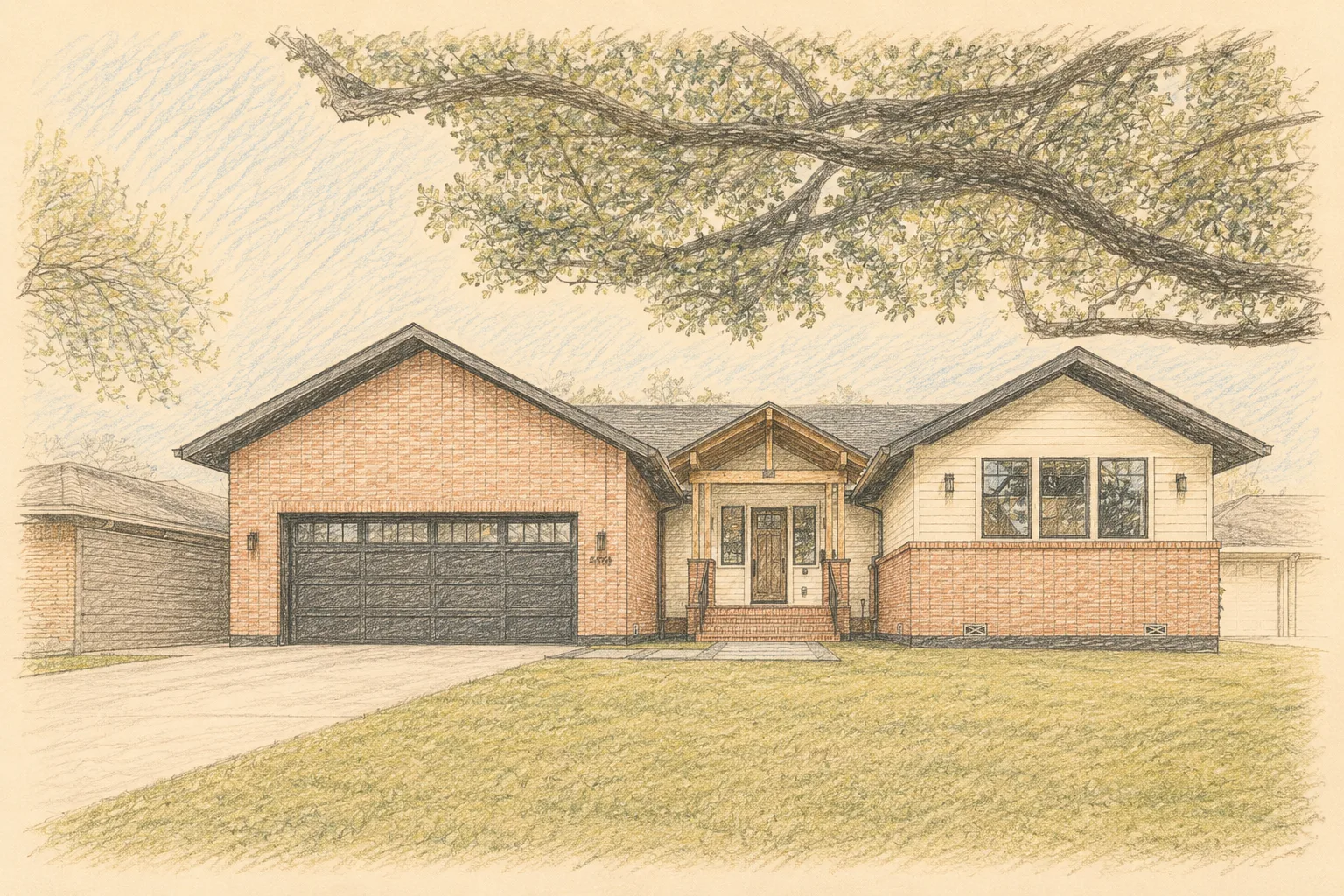
Willowbend, Houston
Tonawanda Residence
The family's new house belongs on its 1950s Willowbend street and holds what they carried from their old one.
Franco Albarran, Founder

Belonging Without Overpowering
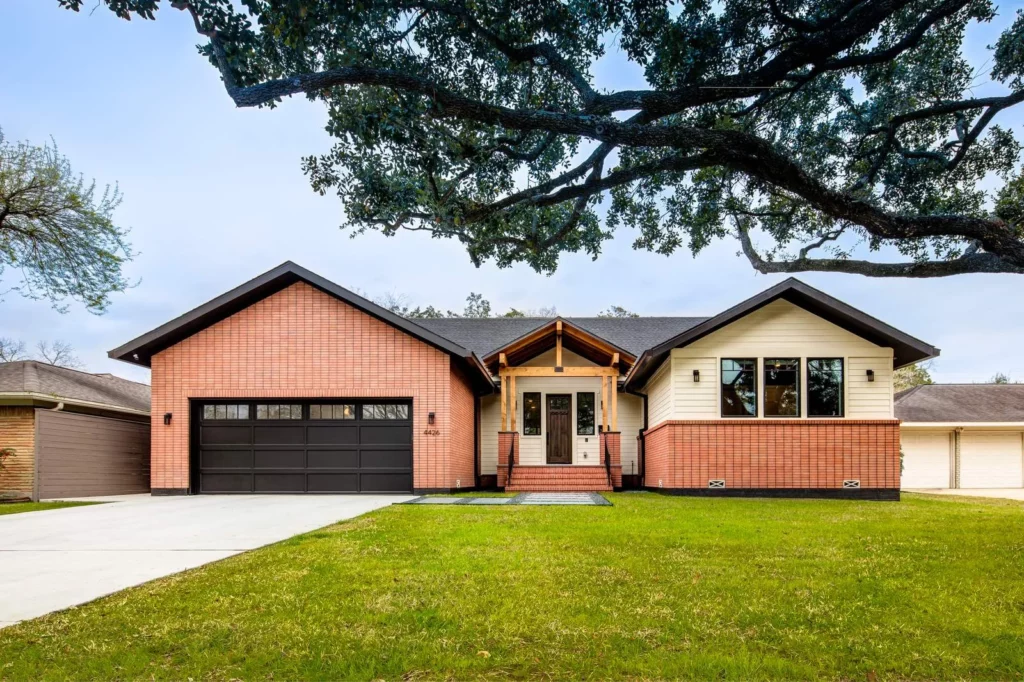
The clients bought a 1950s ranch house in Willowbend, then tore it down to rebuild, and a new house here could easily have overpowered a street of low ranch homes. They wanted something that would fit instead.
So we built in the neighborhood's own language: a low-pitched roof, and a modular brick that was standard in the 1950s. The roof is a dark bronze that matches the window frames, a thread we carried through the whole house, and the neighbors said the new house adds to the street instead of overpowering it.
A new house can still belong on an older street. What in your neighborhood's character would you want a new home to carry forward?
Treehouse Study
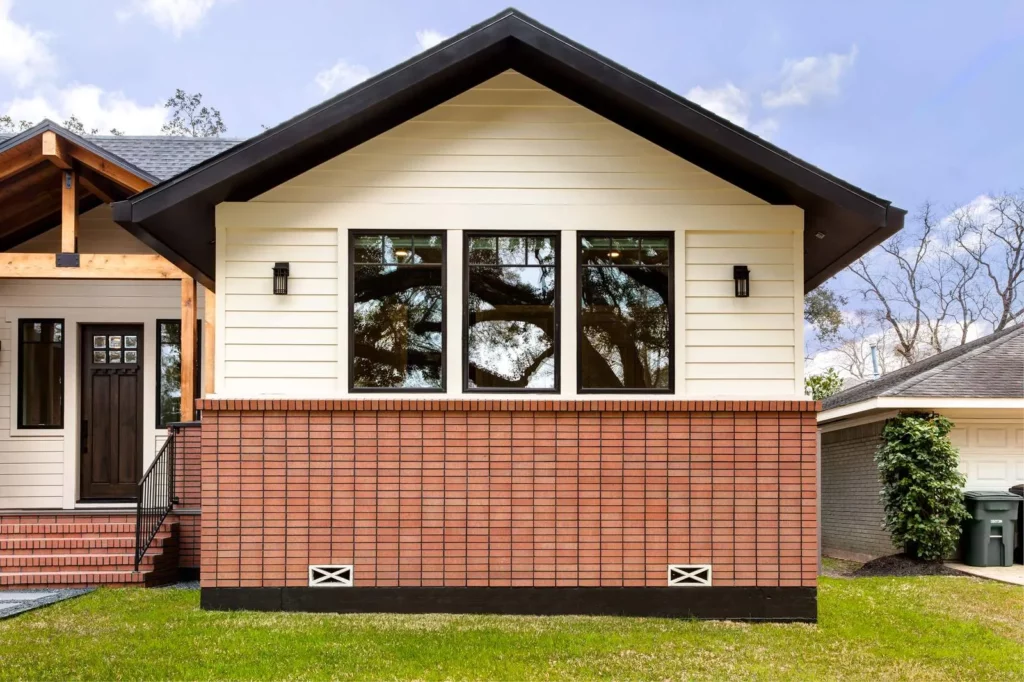
An oak stood at the front of the property, and the client wanted to work from inside its canopy.
We raised the house about four feet on a modular brick base and ran a study across the front, with three windows set toward the oak. With the windows open the room sits up among the branches, and the tree shades it through the afternoon.
A home office can borrow its view from a single tree. What would you want to look at from the room where you work?
Built Around the Table
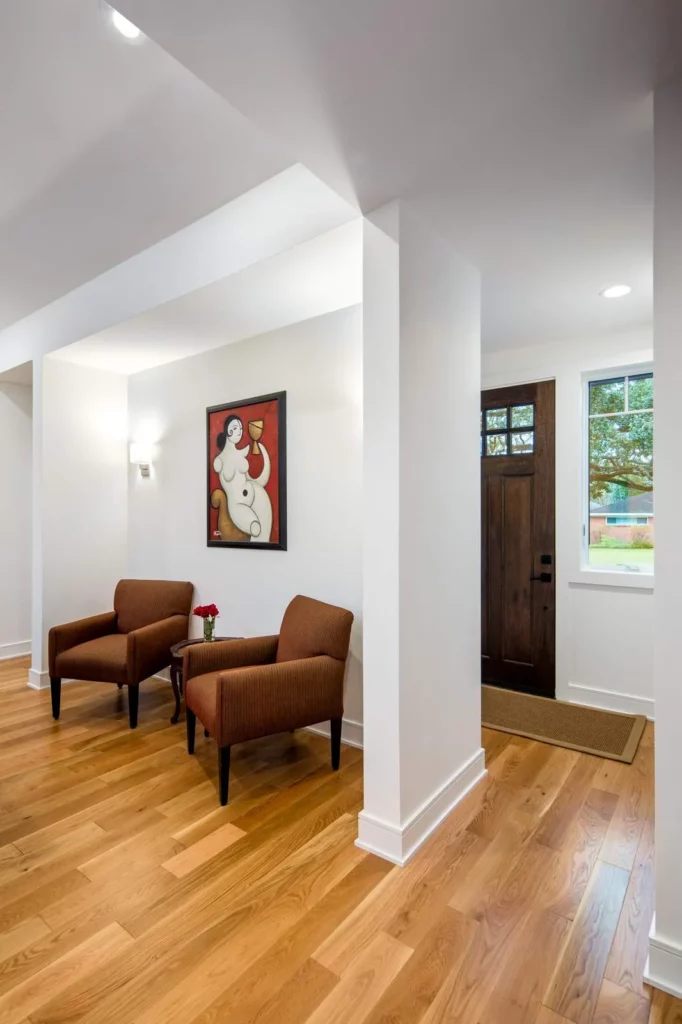
The client kept a small antique table that had been their father's, the last piece of furniture from the home they grew up in that he still owned when he died, and had it restored by a museum art conservator.
So we built a niche around the table, set between the entry and the living room, with two chairs and the painting the client calls The Lady, their first purchase from an Art for Heart charity auction. It sits private enough for a weekend morning coffee with their spouse, open enough to stay connected to the rest of the house.
Some things come to a new home already carrying meaning. When you have an object like that, where should it live?
Warm Modern
The client wanted a clean, modern kitchen, but in a house meant for gathering, clean lines and hard surfaces alone can tip cold.
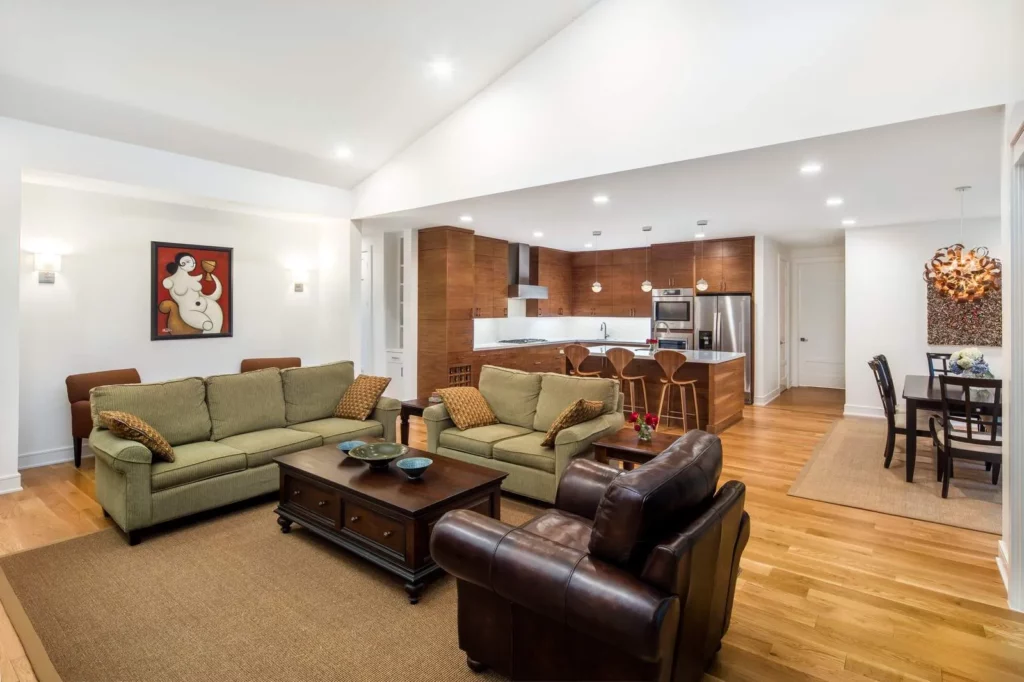
Walnut runs across the cabinetry to hold those modern lines while warming the room, set against white counters and a white backsplash that stay quiet behind the wood. The walnut carries the whole space.
Warmth in a modern room usually comes from one material doing the work. Which would you let carry yours?
One Continuous Grain
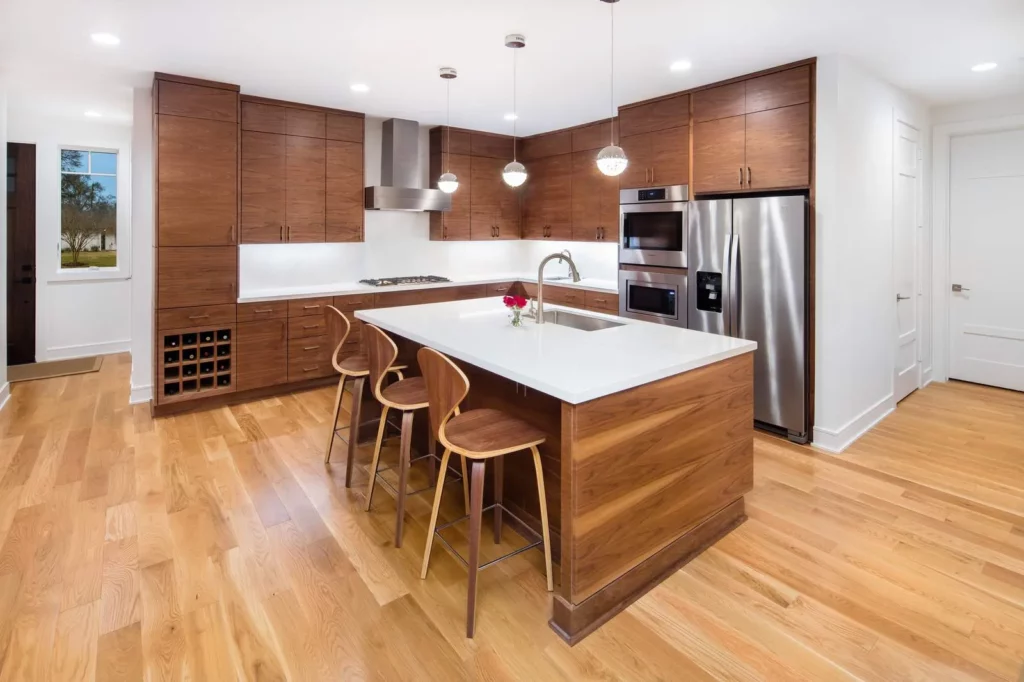
Ordinary cabinet doors are cut from wood wherever it falls, so the grain jumps from one door to the next.
Here we sliced the walnut fronts from matched sheets and hung them in sequence, so the grain runs as one surface across the wine tower, the uppers, and the base cabinets. With the doors closed, the run reads like a single piece of wood.
A wall of cabinets can read as one surface instead of many small ones. How much calm would that bring to your kitchen?
Built to Be Serviced
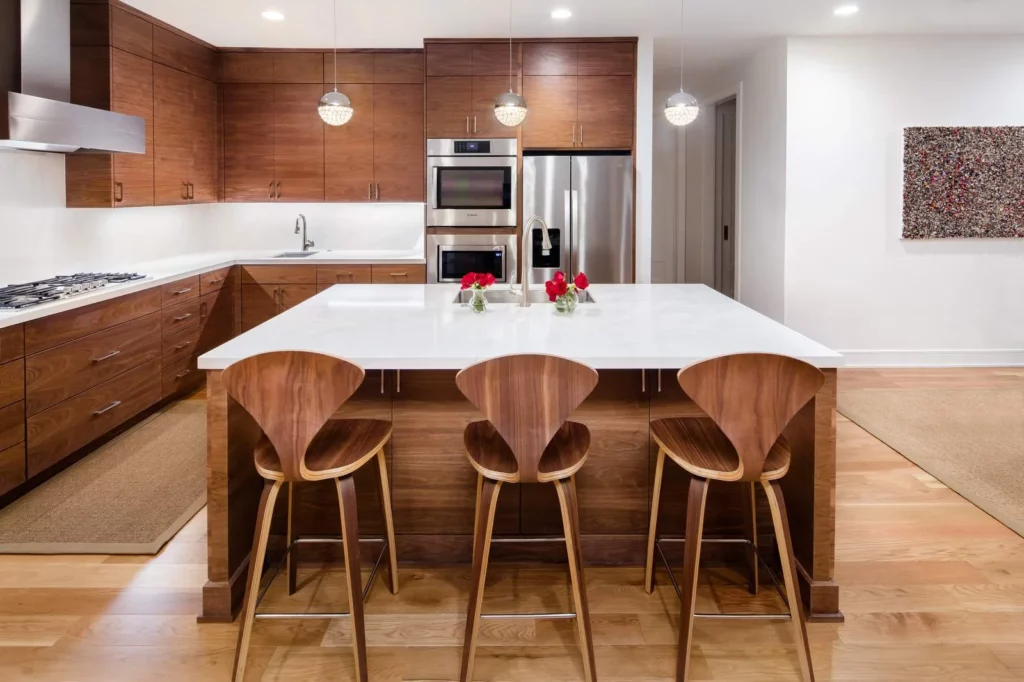
A built-in island usually seals its plumbing and wiring away for good, until the day something needs fixing.
So we made this island's walnut side panels removable, designed that way from the start. Years on, the electrical and water lines behind them can be reached and serviced without tearing the island apart.
The best detail in a kitchen is sometimes the one you never see. What in your home would be worth making easy to reach again later?
Light From Above
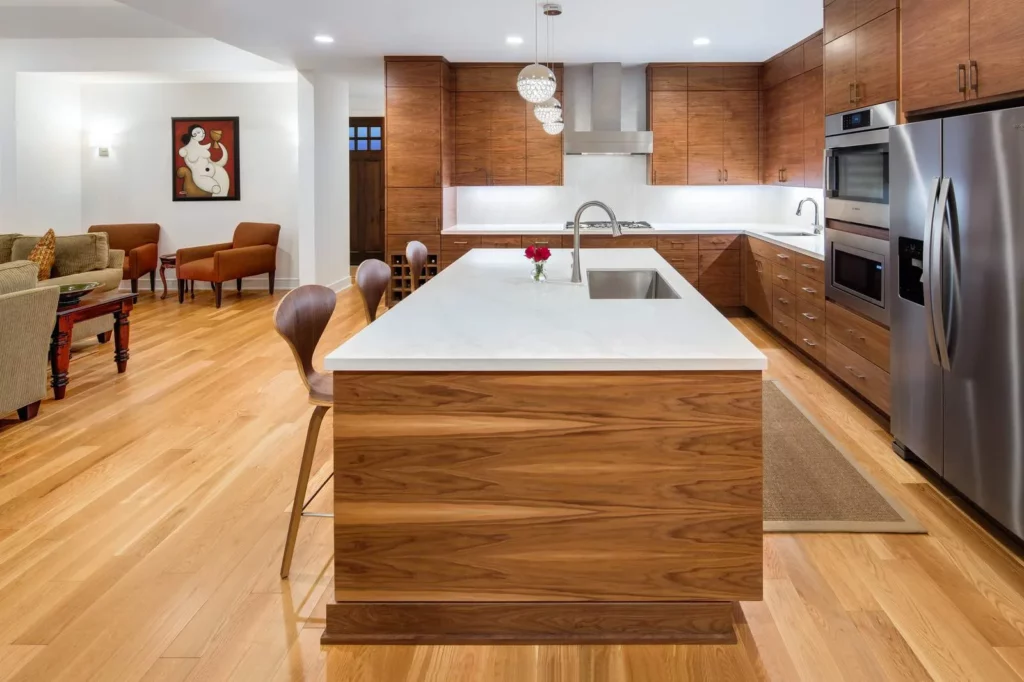
The client wanted a covered porch off the back, an outdoor room that felt like part of the house, but a full roof over it would have blocked the daylight reaching the living room behind.
This side of the house faces north, so that soft, steady light was worth protecting. We raised the back wall, set a band of clerestory windows high above the porch, and sloped a shed roof back into the room, so light still filters in from overhead all day.
Daylight shapes how a room feels long after the design is done. How do you want it to work where you spend the most time?
Told Apart by the Ceiling
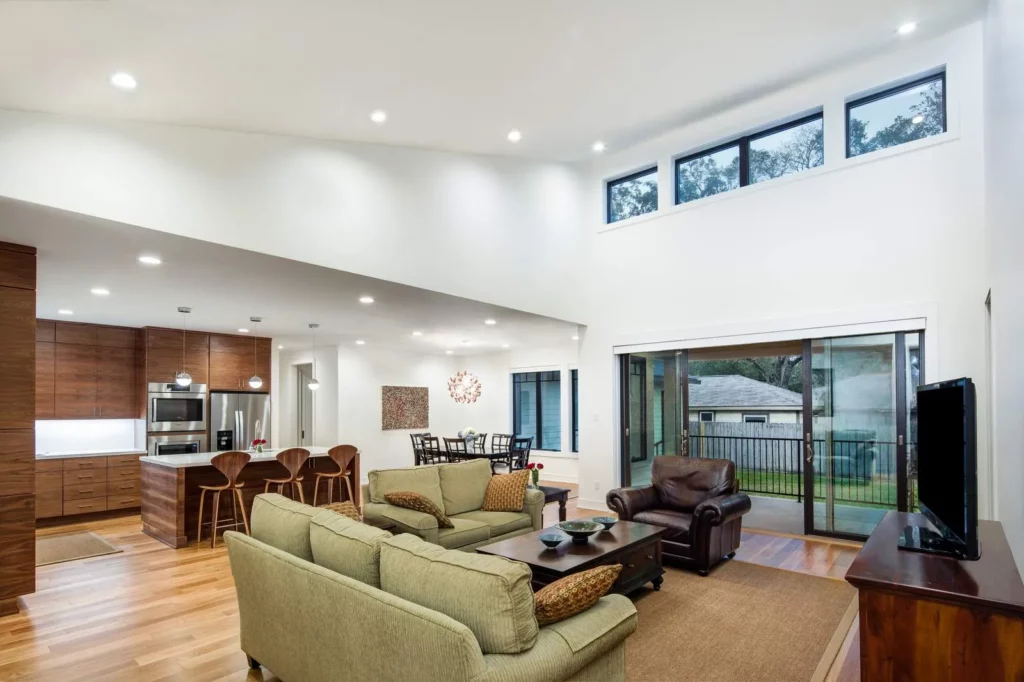
The client likes to host, so the kitchen, dining, and living areas share one open room, which left the question of how to tell them apart without walls.
So we let the ceiling do it: it lifts over the living room and steps down toward the dining and kitchen. You feel the shift as you cross from one area to the next, while the open plan keeps everyone in the same conversation.
An open plan can still have rooms inside it. Where would you want one space to end and the next to begin?
His and Hers, One Shower
In this primary bath, one of the clients keeps things neat and the other does not, and neither wanted to negotiate a single shared vanity every morning.
So we gave each of them a full side of their own, with a separate vanity and mirror, and put one shower between the two with a showerhead on each side. They keep their own routines and still start the day in the same room.
A bathroom can be shared without sharing every inch of it. What in your morning would yours be designed around?
Two of Everything
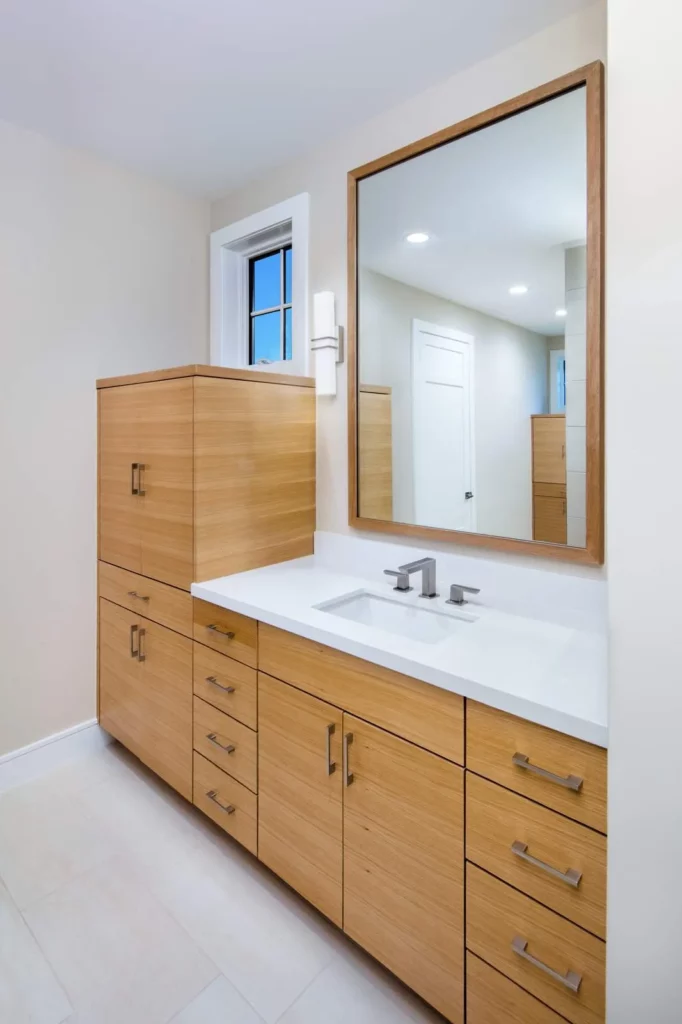
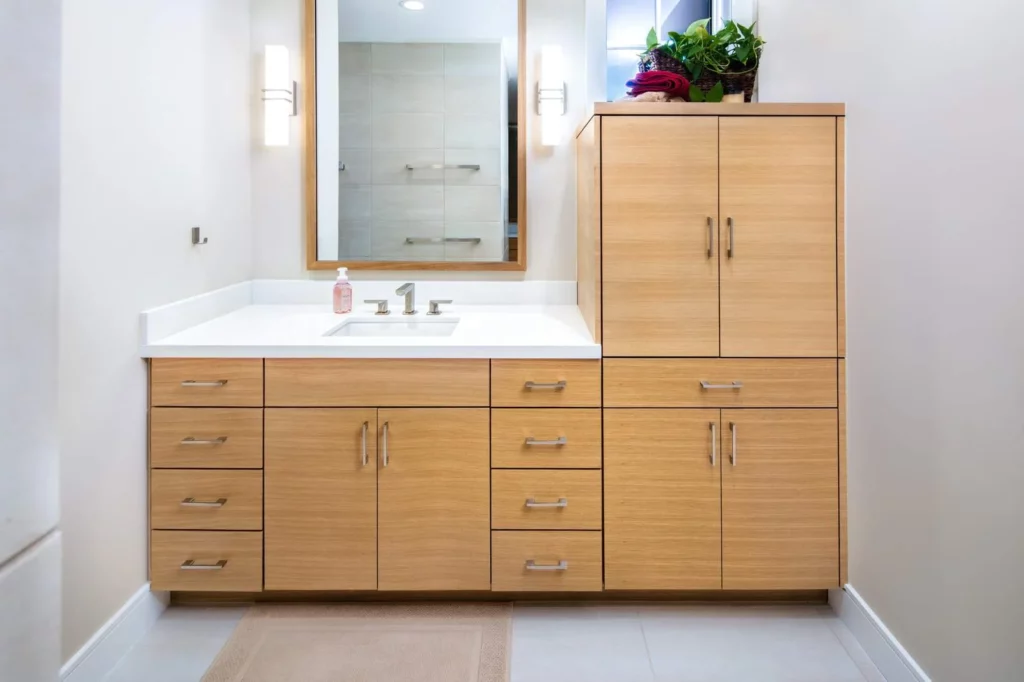
Two people who store their things differently each need storage that works the way they do.
Each side of this primary bath repeats the same cabinetry: rift-cut white oak, the grain matched and turned cleanly at the corner, with a six-foot linen cabinet for towels alongside a his-and-hers toilet and closet. The whole footprint is large, yet each side feels right-sized because it belongs to one person.
A shared room runs better when each person has a place of their own in it. How much of yours would you split, and how much keep in common?
A Color of Its Own
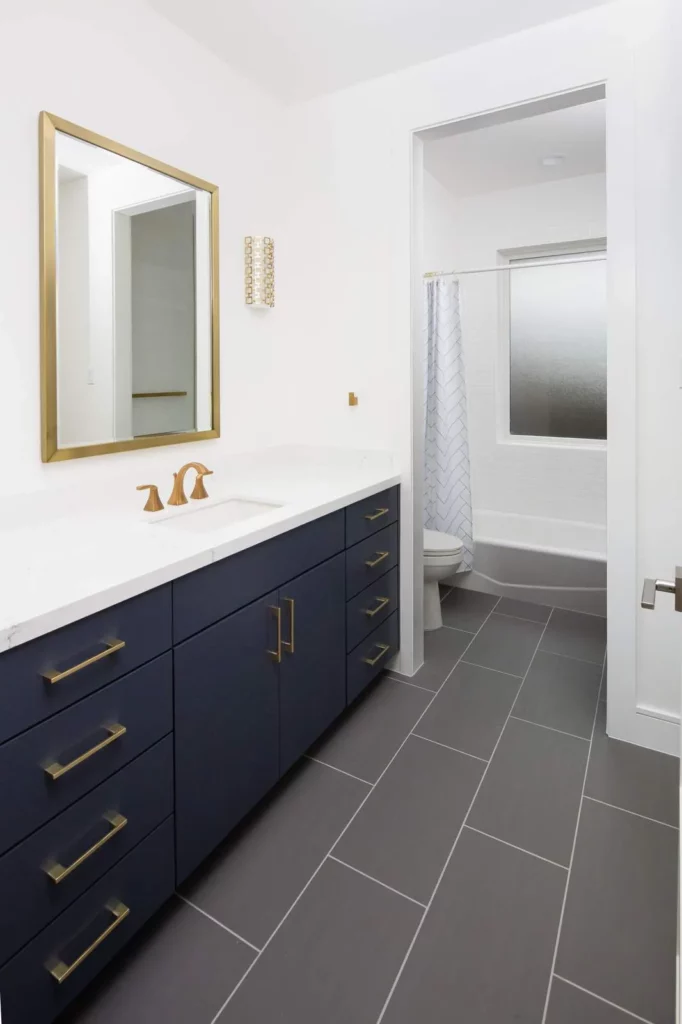
A small bath off the office was the one room where a single strong color could take over without setting the tone for the whole house.
So we ran navy cabinets against brass fixtures and a gold-framed mirror, set over a gray tile floor, with a white subway-tiled tub and shower behind. The color stays contained to one room.
A house holds together better when its boldest move is kept to one spot. Which room of yours could carry a color the rest could not?
How I work, from first sketch to move-in.
Build the team early
Architect, builder, and designer aligned from day one
Design around real life
We study how your family actually lives before drawing plans
Eliminate surprises
Budget and design evolve together throughout the process